First Results 2026
Selected Findings
Career Tracker follows young adults in Switzerland during the years after military recruitment. It examines how education, work, military service, health and personal circumstances evolve over time.
Growing up comes with change
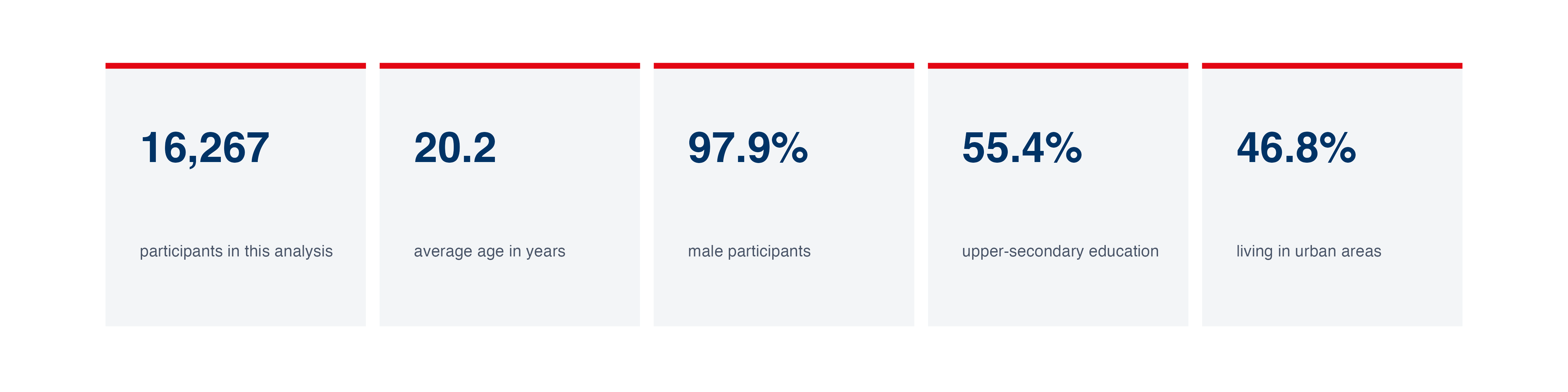
The years after recruitment often involve several changes at once. Education, work, military service, living arrangements, relationships, finances and future plans may all be in motion.
Career Tracker examines how these areas connect and change over time. The study covers education and employment, military service, expectations and experiences, work–life balance, values, mental well-being, resilience, physical activity and significant life events.
More than 17,000 young adults have participated in Career Tracker. The first findings presented here are based on 16,267participants who completed the baseline survey during military recruitment in 2025.
Swiss major regions
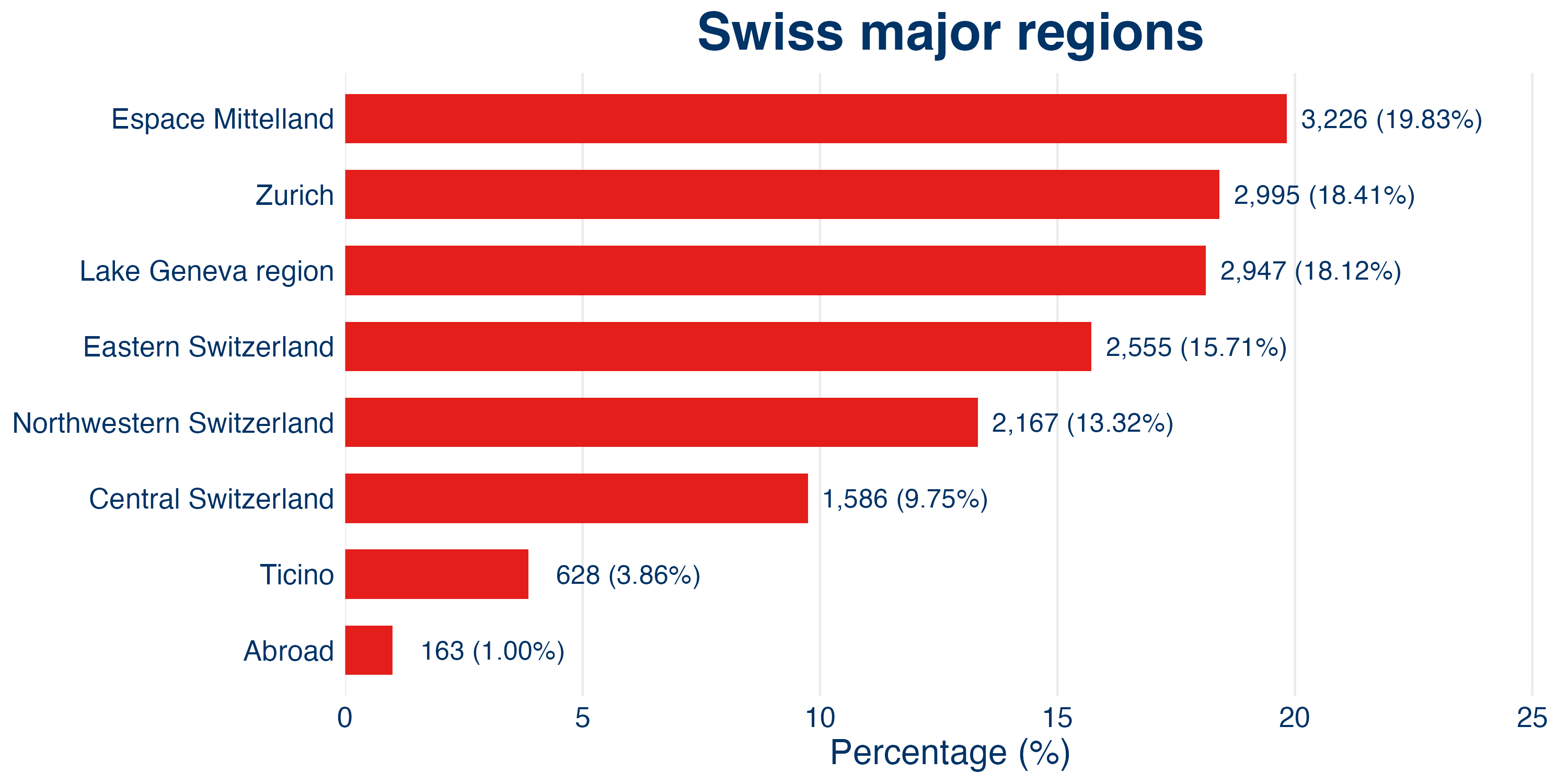
Participants were represented across all Swiss major regions. The largest shares lived in Espace Mittelland (19.8%), Zurich (18.4%) and the Lake Geneva region (18.1%). Eastern Switzerland (15.7%) and Northwestern Switzerland (13.3%) were also well represented, followed by Central Switzerland (9.8%). Smaller shares came from Ticino (3.9%) and abroad (1.0%).
Mother tongue
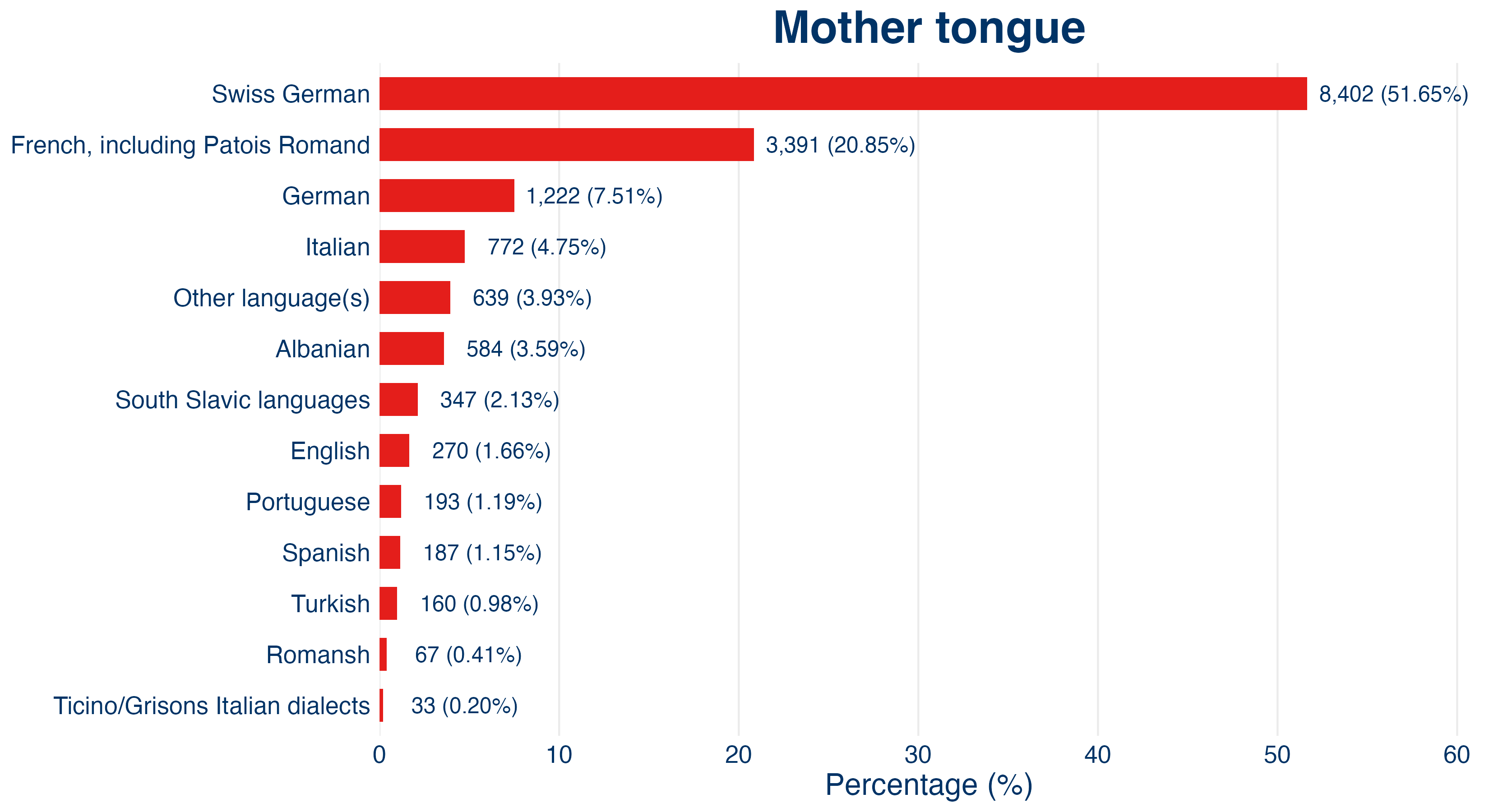
Swiss German was the most frequently reported mother tongue (51.7%), followed by French, including Patois Romand (20.9%). German (7.5%) and Italian (4.8%) were the next most common responses. Each of the remaining mother tongues was reported by fewer than 4% of participants.
Why this matters?
There is no single path through early adulthood. By following participants over several years, Career Tracker shows not only where young adults are at a particular point in time, but also how their situations change.
The study provides evidence on the opportunities, challenges and resources that shape this phase of life. These findings can help inform discussions about how future service conditions can better support young adults.