Univer-Cities Inaugural Distinguished Annual Lecture 2026
Univer-Cities Inaugural Distinguished Annual Lecture 2026 by Prof Dr Bertil Andersson: Univer-Cities and Today’s Global Challenges

22.-23. February 2026, Zurich, Switzerland
We were pleased to host the Univer-Cities Inaugural Distinguished Annual Lecture 2026, given by Professor Dr Bertil Andersson, Nobel Foundation Trustee, Emeritus NTU President & Former CEO, and European Science Foundation Professor. His lecture focused on the role of universal Univer-Cities in creating a new 21st century eco-system.
Epilogue: Indeed, Bertil & Caroline and our Conferees exceeded themselves with distinction. Our heartfelt thanks to UZH for the gracious and unstinting support for this success by acclamation, noted with signed copies of Univer-Cities Volume V. With every good wish and thanks, Anthony Teo
Patrons of the Univer-Cities Annual Distinguished Lecture Series are:
- Prof. Sir Leszek Borysiewicz, Emeritus Vice Chancellor of University of Cambridge
- Prof. Bertil Andersson, member of the Advisory Board Univer-Cities, Nobel Foundation Trustee, Emeritus NTU President & Former CEO, and European Science Foundation Professor
Chairperson of the Inaugural Distinguished Annual Lecture 2026 Zurich was:
Prof. Caroline McMillen, AO FAHMS, Emerita Vice Chancellor University of Newcastle, Former Chief Scientist of South Australia, Member Univer-Cities Advisory Council, Moderator UC-ADL Zurich 2026, Conference Host UC2016.
Event description: The 21st century is characterized by rapid changes in political, economic, and environmental conditions worldwide. This increasing pace of changes represents a challenge to countries, populations, and overarching organizations alike. Cities and universities represent entities at the edge of such changes, posing at the same time challenges and potential solutions.
The Univer-Cities Inaugural Distinguished Annual Lecture 2026 and the following discussion shall contribute to the definition of the role of Univer-Cities in the face of novel challenges and in the creation of a future eco-system for all populations.
Please find the program here. (PDF, 439 KB)
The organizers were:
-
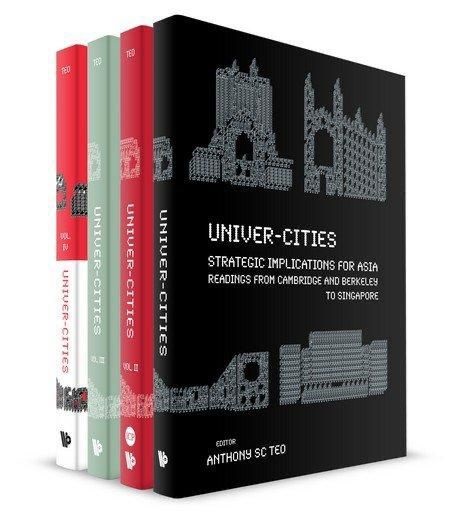
Prof. Anthony S.C. Teo, former Adjunct Professor at Singapore University of Social Sciences, founder and Convenor & Editor of Univer-Cities Volume I-V.
-
Prof. Dr. Dr. med. Frank Rühli, Dean Medical Faculty, University of Zurich, Director of the Institute of Evolutionary Medicine in Zurich.
Speakers and panelists:
- Prof. Bertil Andersson, Advisory Board Univer-Cities & Trustee, Nobel Foundation, Stockholm
- Prof. Caroline McMillen Emeritus Vice Chancellor University of Newcastle & Emeritus Chief Scientist of South Australia
- Prof. Beatrice Beck Schimmer, Vice President Medicine Zurich, University of Zurich
- Prof. Luciano Saso, University La Sapienza Rome and University of Zurich
Symposium management and registration:
Prof. Nicole Bender, Institute of Evolutionary Medicine, University of Zurich, nicole.bender@iem.uzh.ch.
Mr. Marcus Chua Hon Wei, National University of Singapore.
History of Univer-Cities
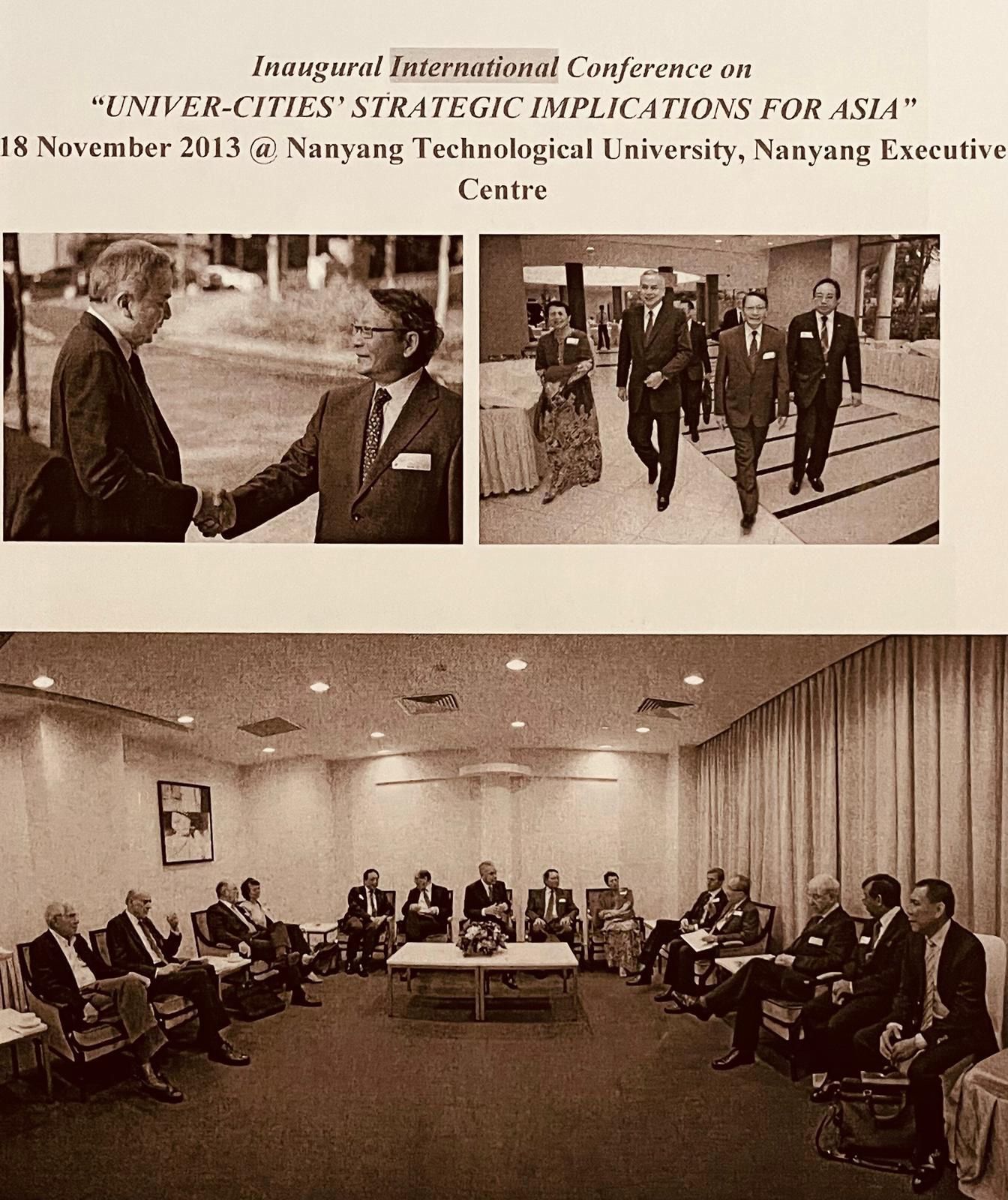
Univer-Cities is an initiative to investigate the bidirectional role of universities and their host cities in facing present and future societal challenges. The initiative organized several conferences that were published in a book series (Univer-Cities Volume I-V). The initiative started a Distinguished Annual Lecture series with the inaugural lecture being held at the University of Zurich in 2026.
The founder of Univer-Cities is Prof. Anthony SC Teo, Singapore. One of the most prominent figures in Univer-Cities from early days onwards were Prof. Sir Leszek Borysiewicz, Emeritus Vice Chancellor of University of Cambridge, and Prof. Bertil Andersson, member of the Advisory Board Univer-Cities, Nobel Foundation Trustee, Emeritus NTU President & Former CEO, and European Science Foundation Professor.
"Andersson described Teo as someone who constantly generated new ideas lsme of which were immediately brilliant while others required patience before their value became clear. One idea that did not require waiting, he noted, was the concept behind the Univer-Cities initiative. Andresson regarded this as an especially insightful framework for thinking about the relationship between universities and the societies around them".