Latest News
News list
-
Oxytocin Linked to Group Competition
Charlotte C. Debras et al. Us against Them: Oxytocin Response to Competition in a Small-Scale Human Society. Proceedings of the Royal Society B. 6 May, 2026. DOI:10.17605/OSF.IO/UK8PA
A study by the University of Zurich shows that the “love hormone” oxytocin plays an important role not only in social bonding but also in competition. In football tournaments involving the Indigenous Tsimane’ people, oxytocin levels increased particularly when teams competed against familiar rivals or clearly defined opposing groups.
Notably, this increase was observed only in men, while no changes were found in women—possibly due to higher baseline levels or different forms of social competition.
The findings suggest that oxytocin influences both team cohesion and competition between groups, highlighting its important role in cooperation and group dynamics.
-

Univer-Cities Inaugural Distinguished Annual Lecture 2026
On 22.-23. February 2026, we were pleased to host the Univer-Cities Inaugural Distinguished Annual Lecture 2026, given by Professor Dr Bertil Andersson, Nobel Foundation Trustee, Emeritus NTU President & Former CEO, and European Science Foundation Professor. His lecture focused on the role of universal Univer-Cities in creating a new 21st century eco-system.
The Univer-Cities Inaugural Distinguished Annual Lecture 2026 and the following discussion contributed to the definition of the role of Univer-Cities in the face of novel challenges and in the creation of a future eco-system for all populations.
The event was organized by Prof. Frank Rühli, UZH, and Prof. Anthony Teo, Singapore. Panelists were Prof. Caroline McMillen, Emeritus Vice Chancellor University of Newcastle & Emeritus Chief Scientist of South Australia, Prof. Beatrice Beck Schimmer, Vice President Medicine Zurich, University of Zurich, and Prof. Luciano Saso, University La Sapienza Rome and UZH. Please find more information here.
-
One Health Microbial Evolution Lab News
Huge congratulations to Danara Flores from the OHMEL Lab - One Health Institute and Institute of Evolutionary Medicine!
Danara Flores has been awarded the European Society of Clinical Microbiology and Infectious Diseases (ESCMID) Research Grant 2026 (20,000 euros) to develop a urine-based diagnostic test for leprosy patients.
This is Danara's first grant and a big step toward more accessible, non-invasive diagnostics that can truly make a difference for patients . So proud of you, Danara, well deserved!"
We are pleased to share that Prof. Dr. Charlotte Avanzi and Dr. Tanvi Honap have published a new article in The Lancet. This important contribution highlights the work of the One Health Microbial Evolution Lab and was published last week.
Read the article here:
https://www.thelancet.com/journals/lancet/article/PIIS0140-6736(25)01963-4/abstract -

Latest IEM Research
We are happy to share our latest work on hereditary xerocytosis (HX), exploring how mechanosensation via Piezo1, a mechanosensitive ion channel, shapes red blood cell (RBC) survival.
Makhro, A., Huisjes, R., Seiler, E., Qiao, M., Bartels, M., Hegemann, I., Eppenberger, P., Bender, N., Dorn, I., Bogdanova, A., van Wijk, R., & Kaestner, L. (2026). Mechanistic Consequences of Piezo1 Gain-of-Function Variants for Decreased Red Cell Survival in Hereditary Xerocytosis. American journal of hematology, 10.1002/ajh.70188. Advance online publication. https://doi.org/10.1002/ajh.70188
We show that altered Piezo1 activity is linked to accelerated RBC clearance, chronic hemolysis, and sustained erythropoietin signaling, providing a mechanistic framework that helps explain the remarkably broad clinical spectrum of HX.
This study highlights how a single mechanosensitive ion channel can connect cellular biomechanics with systemic physiology and disease.
#HereditaryXerocytosis #PIEZO1 #IonChannels #RedBloodCells #Hematology
#Mechanobiology #Erythropoiesis #RareDiseases #TranslationalResearch
#CellBiology #Physiology #BiomedicalResearchCaption:
Red blood cell turnover, oxygen binding, and erythropoietin signaling in hereditary xerocytosis (HX).
(A) Representative gel electrophoresis illustrating the Band 4.1a/4.1b ratio, a molecular marker of red blood cell (RBC) age.
(B) Relationship between the Band 4.1a/4.1b ratio and reticulocyte counts in HX patients compared with healthy controls and sickle cell disease patients.
(C–D) Erythropoietin (EPO) levels show no significant association with reticulocyte counts or average RBC age in HX.
(E) Oxygen dissociation curves demonstrate a significant left shift in HX patients compared with controls across the physiologically relevant oxygen range (8–58 mmHg).
(F) P50 values do not correlate with EPO levels in HX. -
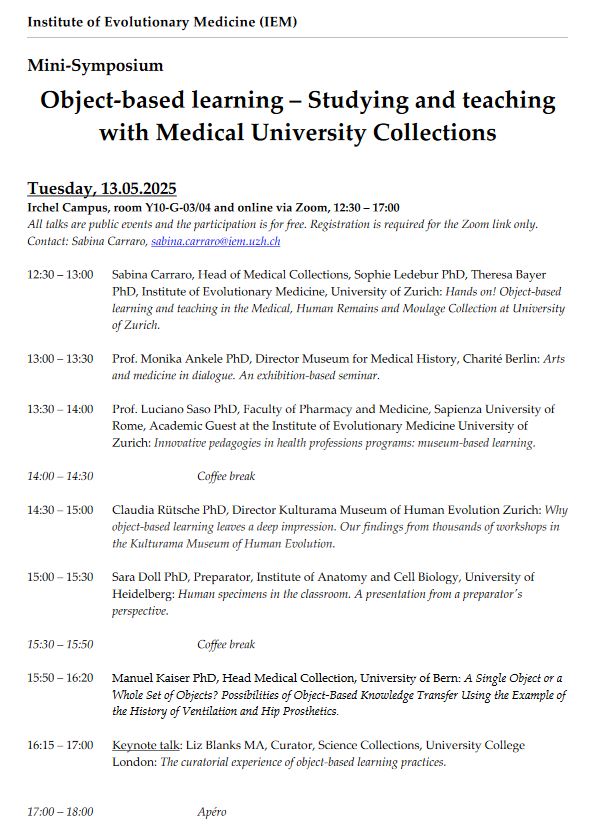
Recap of the Mini Symposium on May 13, 2025
On May 13, 2025, the Institute of Evolutionary Medicine hosted a mini-symposium on object-based learning in medical university collections. Experts from Zurich, Berlin, Rome, Heidelberg, and London shared insights into exhibition-based teaching, anatomical specimen use, and the transfer of knowledge through medical objects. The event highlighted the value of tangible materials in medical education and concluded with a keynote by Liz Blanks from University College London.
-
Galler’ bone pathology collection
At the end of June, the IEM received back the last part of the famous ‘Galler’ bone pathology collection, which consists of approximately 600 mostly dry-bone specimens of many major bone diseases dating from the late 19th and early 20th century. This collection had been on loan to the Natural History Museum in Basel. We are delighted to have this collection safely back at the IEM and to be able to use it for future projects.
-

Workshop on the role of NRF2 in chronic disease and evolutionary aspects
On March 4-5 the Institute of Evolutionary Medicine organized a workshop on the role of NRF2 in chronic disease at the Campus Irchel. In this workshop European research leaders explored the role of NRF2 in diseases such as chronic inflammatory diseases, metabolic diseases, and aging. Central in this workshop also was the impact of NRF2 evolution on human physiologic adaptations and vulnerability to chronic diseases.
-

Announcement: Annual Meeting of the International Society for Evolution, Medicine, and Public Health (ISEMPH), Vanderbilt University, Nashville TN USA, July 8-10, 2025
The Tenth Annual Meeting of the International Society for Evolution, Medicine, and Public Health will be in-person at the 150-year-old campus of Vanderbilt University, in Nashville, TN "Music City USA," from July 8-10, 2025. Students, researchers, clinicians, teachers and others are all welcome to join this opportunity to hear the latest advances from renowned scientists, to present your own research, and to attend workshops, discussions and to renew old friendships and make new ones. And to enjoy all that Nashville and the region has to offer! Register by April 30 to reserve your place and get the lowest rates.
-
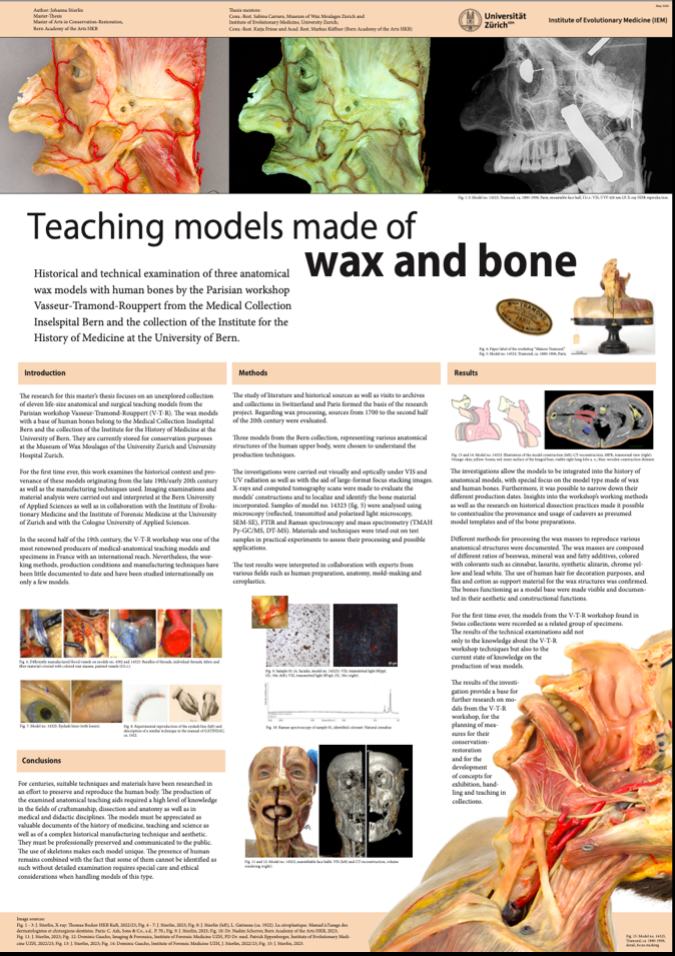
Master's Prize of the Ober-Gerwern Society for IEM Member Johanna Stierlin
IEM Member Johanna Stierlin wins the 2024 Master's Prize of the Ober-Gerwern Society Bern with her Master's thesis. The thesis is a historical and technical examination of anatomical wax models based on human bone specimens from the Parisian workshop Vasseur-Tramond-Rouppert. The Institute of Evolutionary Medicine co-supervised the work on these models. Her Poster for the master thesis was the 1st prize winner of the poster competition at the 15th Annual Conference for University Collections 2024 in Zurich.
-
IEM Academic Guest Prof. Luciano Saso was included in the Clairvate list of highly citated researchers 2024
IEM Academic Guest Prof. Luciano Saso (University La Sapienza, Rome) was listed as a highly cited researcher in 2024 by Clarivate. The selection criteria include the publication of multiple papers over the past decade which rank in the top 1% by citations in the Web of Science™ in the respective research field and publication year. This applies to 1 in 1,000 researchers worldwide.
Prof. Luciano Saso is specialised in the research of the antioxydant effects of the transcriptor factor NRF2. At the IEM he collaborates with the Clinical Evolutionary Medicine group and the Evolutionary Pathophysiology and Mummy Studies group in a project on the evolution of NRF2. Furthermore, he is lecturing on the history of pharmacology on behalf of the Medical and Human Remains Collection group.
-
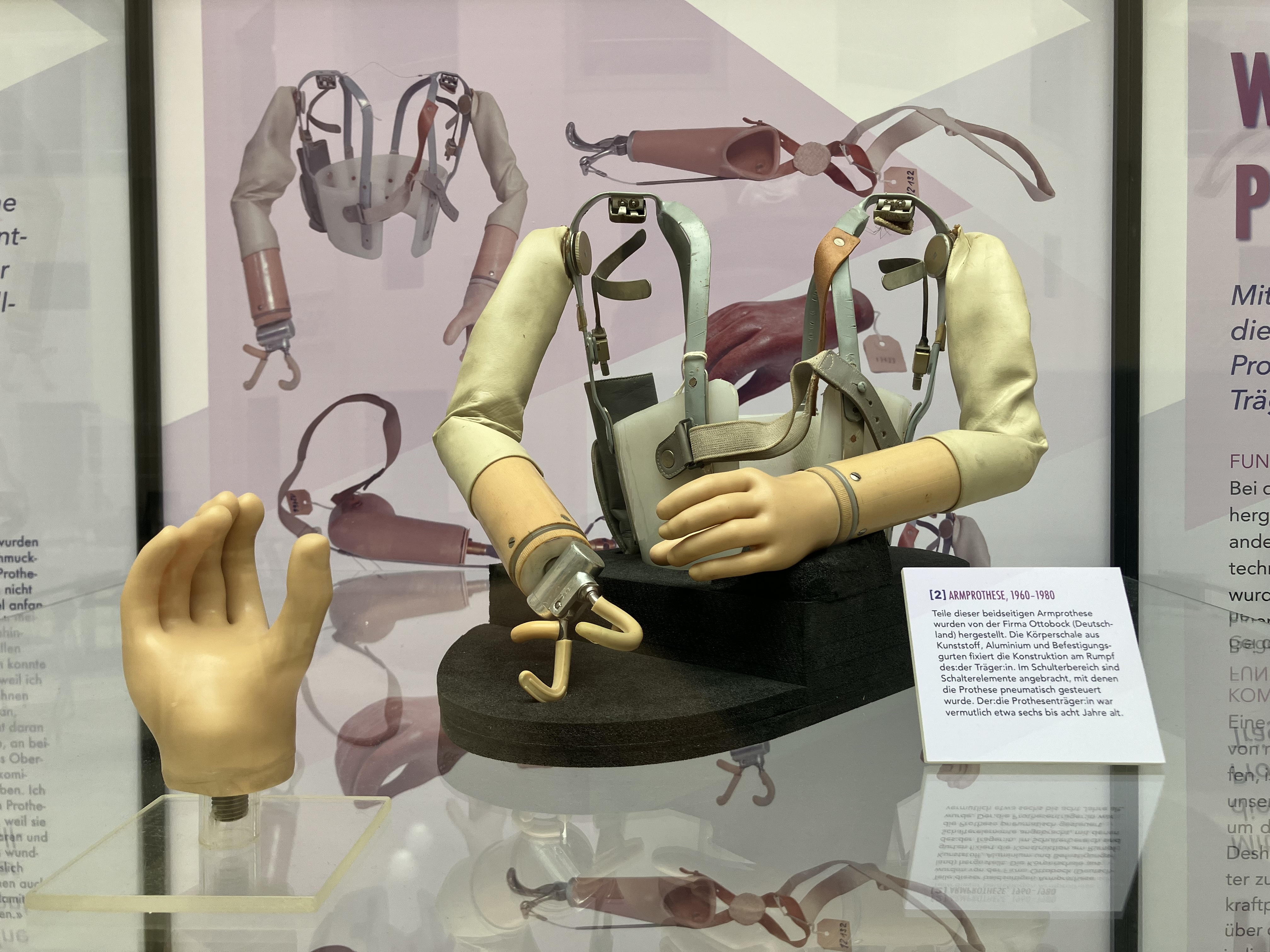
Artificial hands: on the ambivalence of prostheses in the course of time
An exhibition recently hosted by the UZH atrium
-
IEM 10 Year Anniversary
In September 2024, the IEM celebrated it's 10th birthday!
We commemorated the day with an event showcasing the past, present and future of the IEM